Shade Cloth GSM Guide: How to Choose GSM and Shade % for Bulk Orders
Most buyers come to us with a shade percentage in hand — "I need 70%." That's the right number for your end customer, but the wrong place to start a factory order. The spec that actually decides what you get is GSM — grams per square metre. Get the GSM right and the shade, the durability and the cost fall into line. Get it wrong and you can order "70% shade" twice and end up with two cloths that don't behave the same.
Here is how GSM, shade percentage, material and construction actually fit together — and how to spec a bulk order so the cloth you receive is the cloth you pictured.
Start with GSM, not shade %
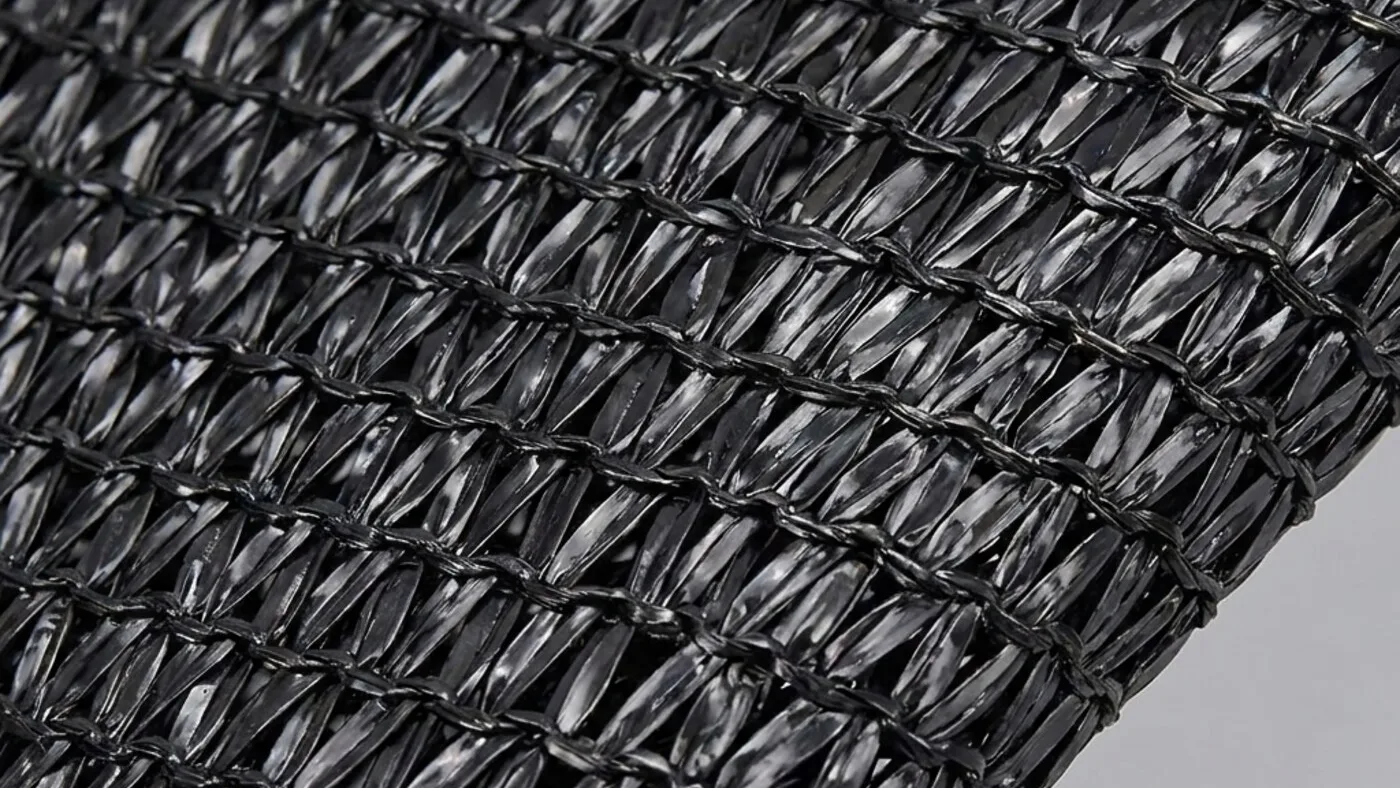
GSM is the weight of one square metre of finished fabric. More weight means more material knitted into the same area: a tighter mesh that blocks more sun and holds up longer outdoors. It also costs more, because there is more raw material in every metre. That is the whole trade-off in one number — heavier cloth, more shade and more life, higher price.
Our shade cloth and shade net run from about 60 to 200 g/m², in widths of 2 to 8 metres, cut to your length: light, breathable agricultural net at one end, dense privacy and courtyard cloth at the other.
PE or HDPE — and why it is not the same cloth
This is where orders most often go wrong, in both directions. Two material grades cover most jobs, and they are not interchangeable:
- Standard PE is the workhorse for agricultural and lighter shade — nursery, greenhouse, field. It does the job, and you are not paying for protection you will not use.
- Upgraded HDPE is UV-stabilized and goes into our newer shade-net line: decorative, courtyard, balcony, anywhere the cloth lives outdoors for years and has to keep looking right.
Shading a field for a season? PE. Selling cloth that has to survive a balcony through several summers? HDPE. Tell us the use and we will confirm the grade — we will not push HDPE onto an order that does not need it.
GSM vs shade percentage: close, but not the same number
Shade percentage is what your customer feels. GSM is what we set on the factory floor to get there. They move together, but knit pattern, tape width and colour all nudge the final shade rate, so we confirm the exact percentage against your spec rather than reading it off the weight. Anyone who quotes you a precise shade % from weight alone is rounding.
As a starting point, here is roughly how weight, shade and use line up — general industry guidance, with the exact figure confirmed per order:
| GSM band (g/m²) | Shade & feel | Common use | Typical material |
|---|---|---|---|
| Light · ~60–90 | lighter shade, more airflow | agricultural & nursery shade, breathable greenhouse cloth | standard PE |
| Medium · ~100–150 | balanced shade and airflow | carports, pergolas, general commercial & garden shade | PE or HDPE per spec |
| Heavy · ~160–200 | dense shade, up to ~90%, more privacy | balconies, privacy screens, courtyard & decorative cloth | upgraded HDPE |
Our standard dark-green and black courtyard cloth is made at 90% shade.
Working the other way — starting from how much shade your use actually needs? Our shade percentage guide covers how to match the shade level to the job.
Flat-wire or round-wire — a separate question
Construction and material are two different choices, and it pays to keep them apart:
- Flat-wire (tape) carries the widest decorative and two-tone colour range — the usual pick for courtyards and balconies, where the cloth is on show.
- Round-wire (monofilament) gives a tighter, more technical mesh.
Both come across the GSM range, and either can be PE or HDPE — the construction does not decide the material for you. We set them together against what you are actually doing with the cloth.
Wondering why shade cloth is knitted in the first place — and where woven fits in? Our knitted vs woven shade cloth guide covers the construction question.
How long it lasts — the honest answer
Outdoor life comes down to three things, and GSM is only one: the weight, the UV stabiliser in the material, and the climate it hangs in. Across the trade, knitted shade cloth runs somewhere around 3 to 10 years depending on those — a cloth that lasts seven years in a mild climate can fade years sooner under hard UV. So when a supplier quotes a flat "10-year cloth" with no word on UV grade or where it is going, take it with a pinch of salt. Our HDPE line is UV-stabilized for outdoor use; tell us your climate and we will point you to the grade that suits it.
Width, length and colour
Standard widths are 2, 3, 4, 5, 6 and 8 metres, cut to your length and wound for clean container loading. Colours run black, coffee, dark green, beige and cream, plus blue, green, grey and aluminet silver, and two-tone stripes such as blue/white, grey/white and dark-green/white. Custom colours and your own label are available on request.
How to spec a bulk order
Give us these five and we can quote properly and confirm MOQ and lead time — leave one out and we will only have to come back for it:
- GSM — your target weight, or the shade rate you want us to reach
- Width and length — from the 2–8 m widths, cut to size
- Colour — single or two-tone, standard or custom
- Construction and material — flat or round wire; PE or HDPE, confirmed for your use
- Quantity and destination — so we can quote FOB, CIF or EXW from Qingdao or Tianjin
MOQ moves with the GSM, width, colour and customization, and we confirm it with the quote. Full specifications and packing details come with the order.
Putting a wholesale order together? Our bulk order RFQ checklist covers exactly what to send a factory to get a clean quote.
Get a factory-direct quote on your bulk shade cloth
Send your size, quantity and destination, and we will confirm material (PE or HDPE), GSM, shade rate, MOQ and lead time. Not sure on GSM? Tell us what the cloth is for and we will spec it.