
Is Shade Cloth Knitted or Woven? Why Construction Decides How It Cuts and Lasts
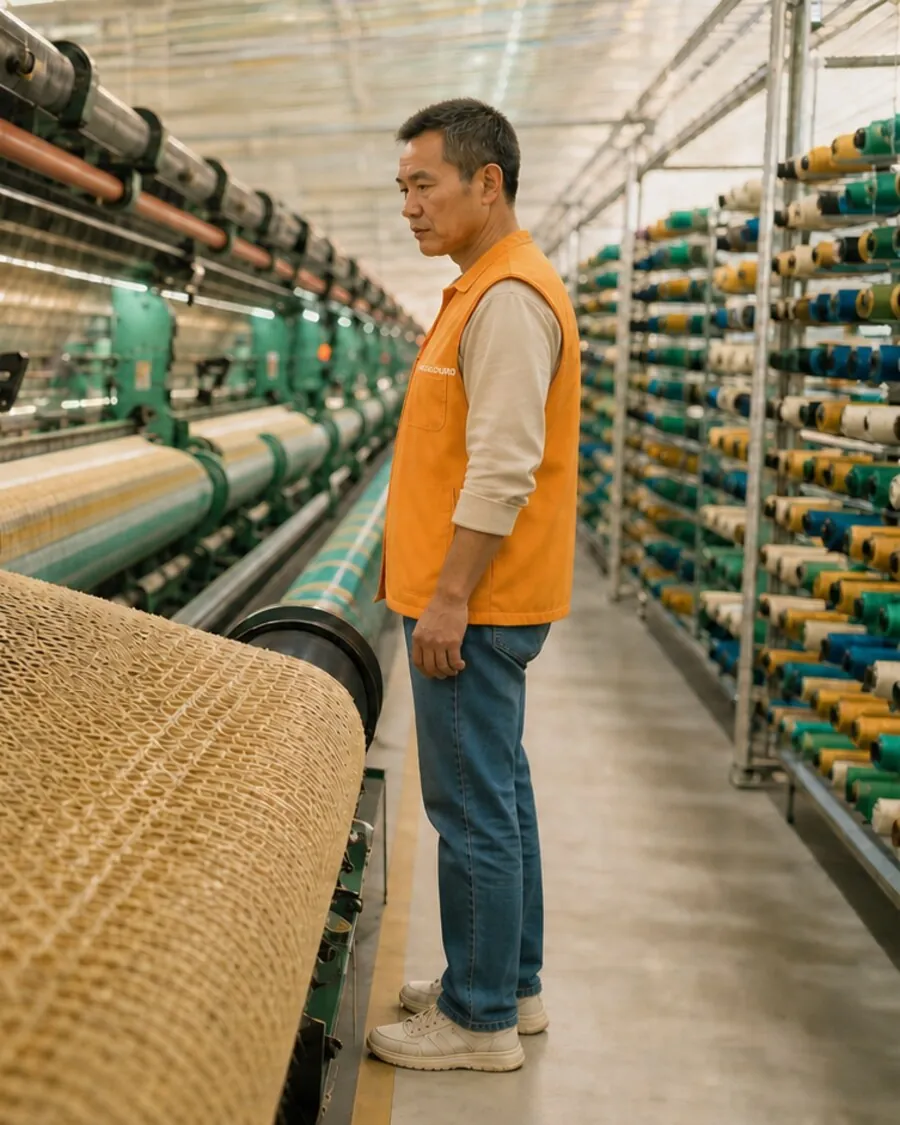
One question we get from buyers who've done their homework: "Is your shade cloth knitted or woven?" It's worth asking, because the answer isn't cosmetic — construction is what decides how the cloth cuts, how it tensions over a frame, and how the edges hold up outdoors. The short version: our shade cloth and shade net are knitted, and the woven material in our range is the tarpaulin. Those aren't two grades of one cloth; they're two different fabrics built for two different jobs.
Here is what knitted and woven actually mean on the factory floor, why shade cloth is almost always the knitted one, and how that maps onto what you'd order from us.
Knitted vs woven — what's actually different
Both start as the same kind of plastic yarn; the difference is how that yarn is locked together. Knitted fabric is built from interlocking loops — the yarn loops through itself, the way a knitted jumper does. Woven fabric crosses two sets of yarn over and under at right angles, like a basket. That one structural difference sits behind everything buyers actually care about:
- Cut edges. Knitted loops hold together when you cut across them, so a knitted cloth resists running and fraying at a raw edge far better than woven — which matters when cloth is cut to length off the roll. Woven fabric, cut across the threads, wants to unravel and usually needs a sealed or bound edge.
- Stretch and give. Looped construction has some natural give, so knitted shade cloth sits and tensions cleanly over a frame or pergola. Woven fabric is stiffer and holds its shape — which is what you want in a tarpaulin, not in a shade sail.
- Air and water. A knitted mesh is open and breathable: it throws shade while letting heat and wind pass through. Woven and coated tarpaulin is built tight to keep water out. Opposite goals, opposite construction.
Why shade cloth is knitted
Shade cloth has to do three things at once: throw a controlled amount of shade, breathe so heat doesn't build up underneath, and survive being cut to size and tensioned outdoors for years. Knitting is what delivers all three — the open looped mesh shades and breathes, and the loops keep a cut edge stable. That's why our shade cloth and shade net are knitted, in both flat-wire (tape) and round-wire (monofilament). It's also why you can order it cut to any length off the roll without the edge coming apart on the way to site.
Knitted cloth resists fraying at a cut edge — but it isn't indestructible. A finished shade sail or panel that's tensioned and lives outdoors for years still wants a bound edge, a hem or grommets where the load goes. We finish edges to your order.
Where woven comes in — the tarpaulin
Woven isn't the lesser fabric; it's just built for the opposite job. Our woven PE tarpaulins are a tight, woven sheet for covers and rain protection, where you want the material to keep water out rather than let air through. (Our clear and heavier PVC tarpaulins are a coated film — different again, neither a knitted nor a woven mesh.) So across our range the rule is simple: if it's there to shade and breathe, it's knitted; if it's there to cover and keep the rain off, it's the tarpaulin.
Knitted — then flat-wire or round-wire
Once you've settled that shade cloth is knitted, the next choice is which knit. Flat-wire (tape) carries the widest decorative and two-tone colour range; round-wire (monofilament) gives a tighter, more technical mesh — and either can be PE or HDPE. That's a spec choice in its own right, and our shade cloth GSM guide walks through flat vs round, GSM and material together. Still working out how much shade you need? Start with the shade percentage guide.
Get a factory-direct quote
Tell us what you're shading and we'll confirm the cloth — knitted shade cloth or woven tarpaulin — along with construction, GSM, shade rate, colour and edge finish, and quote FOB, CIF or EXW from Qingdao or Tianjin. Putting the full order together? Our bulk order RFQ checklist covers everything to send.